How to Assess Flood Zones Before Buying a Home
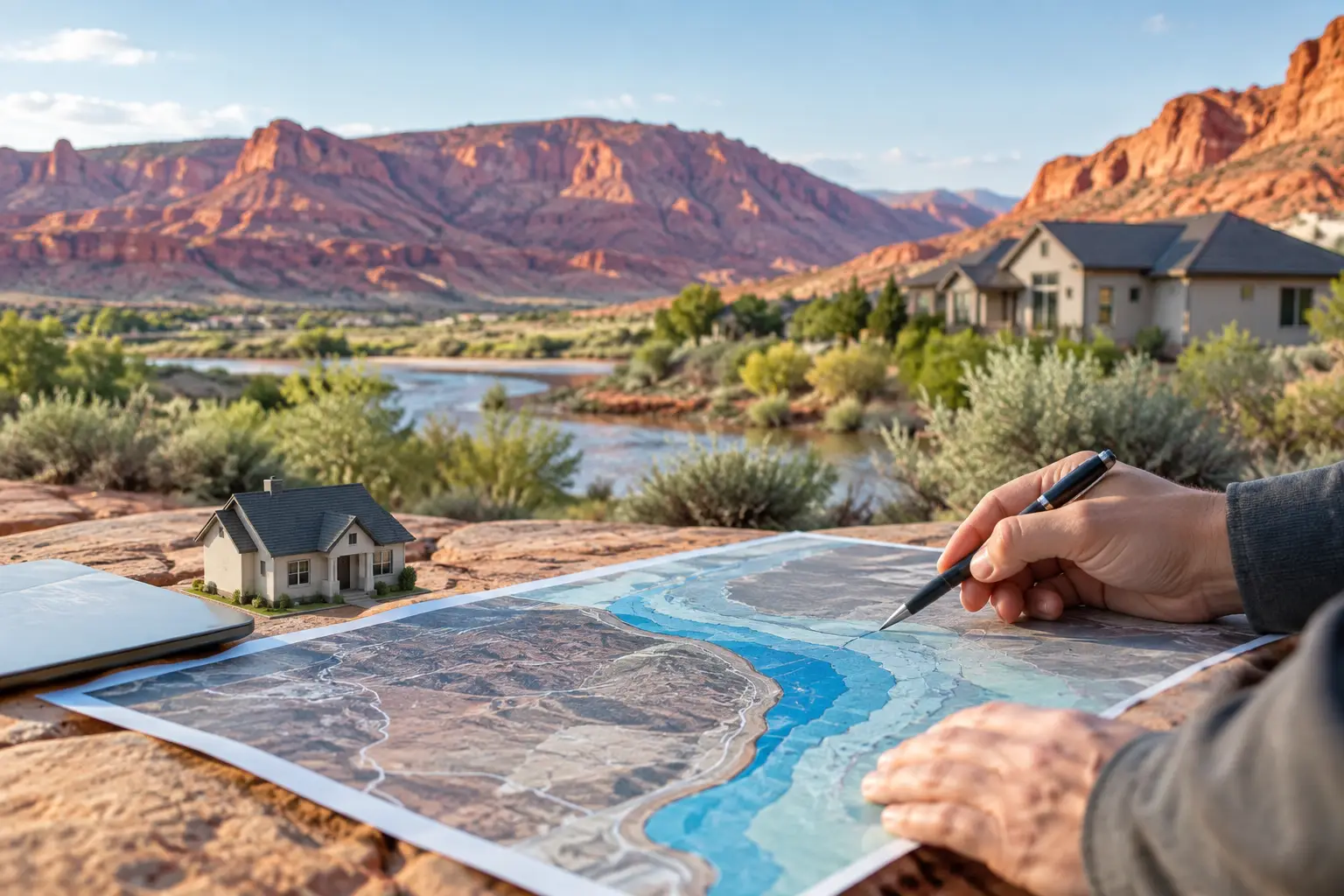
A dry wash can look like a beautiful piece of open space on a sunny Southern Utah afternoon. During a fast-moving storm, that same wash may carry significant runoff. That is why knowing how to assess flood zones is not just a box to check before buying a home. It is part of understanding the property, its long-term costs, and the lifestyle you are choosing.
Flood risk should never automatically rule a home in or out. Many desirable properties are near natural drainage corridors, and a well-built, properly insured home may still be a smart purchase. The key is replacing assumptions with clear information before you make an offer or remove your due-diligence contingencies.
How to Assess Flood Zones Before You Make an Offer
Start with the official flood map for the property address. FEMA Flood Insurance Rate Maps identify Special Flood Hazard Areas, commonly called flood zones, and they are the first reference point for lenders, insurance providers, buyers, and real estate professionals.
A property in a mapped high-risk area may carry designations such as Zone A, AE, or VE. If you finance a home in one of these areas with a federally regulated mortgage, flood insurance is generally required. Zone X often indicates lower mapped risk, although it can be either shaded or unshaded, and neither designation means flooding is impossible. A floodway is especially important to identify because it is the portion of a floodplain reserved to move water during a major flood event, and development restrictions can be more significant there.
Map designations provide a useful starting point, not the whole story. FEMA maps are based on studies that may be updated over time. Parcel lines and map boundaries can also be difficult to interpret at a glance. A home near the edge of a zone deserves a closer review rather than a quick yes-or-no decision.
Ask for the map panel, its effective date, and the property’s location in relation to the boundary. If the home appears to be in or near a Special Flood Hazard Area, an elevation certificate, survey, or insurance professional may provide a more precise picture of the risk and potential premium.
Look Beyond the Map at the Land Itself
Flooding does not always follow a neat line on a map. Local drainage patterns, street design, nearby development, soil conditions, and the slope of the lot all matter. This is particularly true in Southern Utah, where intense seasonal rainfall can create flash-flood conditions in washes, low points, and areas below higher terrain.
When you visit the property, look carefully at how water would move during a heavy storm. Is the house lower than the street? Does the driveway slope toward the garage? Are there retaining walls, drainage swales, culverts, or channels nearby? Notice whether roof downspouts direct water away from the foundation and whether the yard appears to drain toward or away from the home.
A few landscape clues can be revealing. Erosion, sediment buildup, water staining on block walls, unusually raised garden beds, or a garage threshold that sits below the driveway can suggest that water management has been an issue. These signs do not prove flood damage, but they give you smart questions to ask.
It also helps to visit the neighborhood after rainfall when possible. You may see where water pools near curbs, how streets drain, and whether runoff concentrates around certain lots. A beautiful view lot on a hillside can have different drainage concerns than a home on a flat street, so the answer always depends on the specific property.
Review Disclosures and Ask Direct Questions
Seller disclosures are an important part of the process, but do not rely on them as your only source of information. Review them carefully and ask whether the seller knows of prior flooding, water intrusion, drainage repairs, insurance claims, or improvements made to redirect water.
The most useful questions are specific. Ask whether water has ever entered the home, garage, crawlspace, or yard; whether flood insurance has been carried; whether the property has received a claim payment; and whether any drainage work was completed by the seller, an HOA, or the city. If the home is in a planned community, ask whether the HOA maintains drainage facilities and whether there have been assessments or recurring concerns.
Request documentation when it is available. Photos of prior work, contractor invoices, engineering reports, permits, and insurance correspondence can add context that a simple verbal answer cannot provide. A seller may have addressed a past issue effectively, but you still want to understand the cause, the solution, and whether ongoing maintenance is required.
Get an Insurance Quote Early, Not at Closing
If flood insurance may be required or advisable, request a quote early in your due-diligence period. The annual premium can affect your monthly housing budget, loan qualification, and the true cost of ownership. Waiting until the final days before closing can create avoidable stress and leave little time to compare options.
An insurance agent can help determine whether coverage is required by your lender and explain available policy choices. Coverage may be offered through the National Flood Insurance Program or private insurers, depending on the property and carrier availability. Premiums can vary based on the home’s elevation, foundation type, flood zone, coverage amount, deductible, claims history, and other rating factors.
Do not assume a home outside a high-risk zone needs no protection. A meaningful share of flood claims occur outside areas where lenders require insurance. For some buyers, especially those near washes, drainage channels, or low-lying streets, a lower-cost policy may offer valuable peace of mind even when it is optional.
Make the Inspection Work Harder for You
A standard home inspection is essential, but an inspector is not a flood engineer or insurance underwriter. Let your inspector know that drainage and water intrusion are specific concerns. Ask them to evaluate visible grading, gutters, downspouts, roof drainage, foundation conditions, exterior drainage systems, and signs of moisture or past repairs.
If the inspection identifies concerns, consider bringing in the right specialist. Depending on the issue, that could mean a drainage contractor, structural engineer, geotechnical professional, surveyor, or plumber with camera-scoping equipment. Spending more on targeted advice can be worthwhile when it helps you avoid an expensive surprise after closing.
For homes near a wash or mapped flood area, also confirm whether any improvements were properly permitted. Finished basements, additions, patio enclosures, detached structures, and altered grading can change how water moves through a property. Improvements that look attractive may create insurance, maintenance, or compliance questions if they were not completed correctly.
Consider the Property’s Future, Not Only Today’s Risk
Flood-zone research matters to homeowners, but it also matters when you think about resale and investment value. A future buyer will likely ask the same questions you are asking now. Knowing the insurance costs, documentation, mitigation features, and neighborhood drainage history helps you make a more informed decision and position the home honestly when the time comes to sell.
You should also consider planned development around the property. New roads, construction, and grading can change drainage patterns, sometimes for the better and sometimes in ways that require additional infrastructure. Local planning and public works information can help clarify whether nearby projects may affect access, runoff, or drainage maintenance.
A mapped flood zone is not a reason to panic, and an unmapped area is not a reason to skip due diligence. The goal is to understand the level of risk, the cost of managing it, and whether that trade-off fits your plans. The right home should feel exciting, but it should also let you move forward with your eyes open.
When a property raises questions, pause long enough to get answers. A trusted local Realtor can help you organize the right questions, coordinate with the appropriate professionals, and keep your purchase decision centered on both the home you love and the confidence you deserve.
Amy Hansen-Southern Utah Realtor