
New Construction Versus Resale Homes Compared
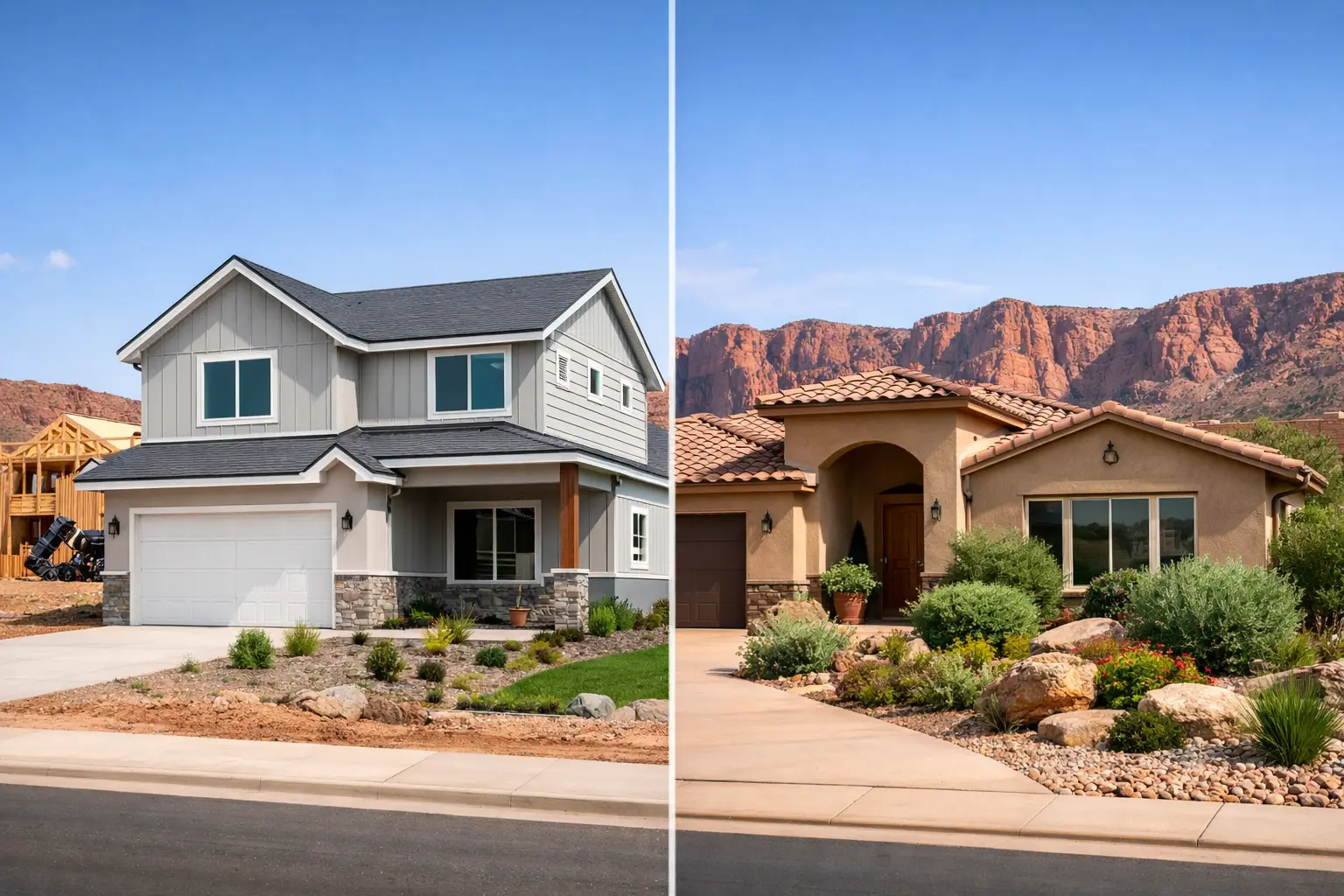
A brand-new home can be exciting: fresh finishes, modern layouts, and the chance to be the first person to make memories there. A resale home can offer something equally compelling: an established neighborhood, a mature yard, and a home you can see exactly as it stands today. When weighing new construction versus resale homes, the right choice is rarely about which option is universally better. It is about which one best supports your timeline, budget, lifestyle, and long-term plans.
For buyers in Southern Utah, that decision can also shape the kind of life they create. A new community near Hurricane may offer open views and newer amenities, while an existing home closer to favorite parks, schools, or established services may feel immediately familiar. Both can be excellent investments when the details are understood before an offer is made.
New Construction Versus Resale Homes: The Core Difference
New construction means buying a home that is newly built or still being built. Depending on the stage of construction, you may have the opportunity to choose flooring, cabinets, countertops, fixtures, and other features. Some buyers purchase a completed spec home, while others buy earlier in the process and personalize more of the design.
A resale home has had at least one previous owner. It may be only a few years old and feel nearly new, or it may have decades of character, landscaping, and upgrades. Its condition, location, and price depend on the individual property rather than a builder’s current inventory and pricing structure.
The difference sounds straightforward, but the financial and practical details can be significant. A smart decision starts with looking beyond the model-home experience or the charm of a well-loved neighborhood.
Why Buyers Choose New Construction
The appeal of new construction is easy to understand. Everything is new, and the home is designed for the way many households live now. Open living spaces, larger closets, energy-efficient systems, and modern kitchens are often standard features or available upgrades.
Modern systems and a builder warranty
A new home generally comes with newer HVAC equipment, appliances, roofing, plumbing, and electrical systems. That can reduce the likelihood of immediate repair expenses, although it does not eliminate maintenance. Most builders also provide warranties that cover certain components for specific periods of time. Buyers should read the warranty carefully, understand what is excluded, and keep records of every service request.
Energy efficiency can be especially meaningful in Southern Utah, where summer cooling costs deserve real consideration. Better insulation, efficient windows, and current building standards may help manage utility use. The exact savings will vary by home design, orientation, thermostat habits, and local utility rates, so it is wise to evaluate the home itself rather than assume every new house will be inexpensive to operate.
Customization and a clean start
For some buyers, choosing finishes is more than a cosmetic benefit. It lets them create a home that feels personal from day one, without planning an immediate renovation. A buyer who wants a specific kitchen layout, flooring style, or accessible design feature may find more options in an early-stage build.
Still, upgrades require discipline. Builder design centers make it easy to fall in love with beautiful options that stretch the budget. Some upgrades add daily enjoyment and meaningful resale appeal, while others may not return their cost. Before selections begin, it helps to set a firm budget and separate must-haves from nice-to-haves.
Incentives can be valuable, with a closer look
Builders may offer closing-cost assistance, rate incentives, or upgrade credits, particularly on completed inventory homes. These offers can be helpful, but they should be compared against the home’s price, the loan terms, and alternatives in the broader market. An incentive is only a benefit if the full transaction makes sense for the buyer.
Using a builder’s preferred lender may be convenient and can sometimes produce a strong package. Buyers can still compare financing options and ask clear questions about rates, fees, credits, and the total cost over time. Having independent representation during this process gives buyers someone focused on their side of the decision.
The Trade-Offs of Building New
A new home is not automatically a simpler purchase. If the home is not finished, the closing date may shift due to weather, labor availability, materials, permitting, or final inspections. Buyers with a lease ending, a home to sell, or a firm relocation date should build flexibility into their plan.
The advertised base price may also be far from the final number. Lot premiums, structural changes, design upgrades, landscaping, window coverings, appliances, and backyard improvements can add up quickly. In a new neighborhood, it is also worth asking what remains to be built nearby. Construction activity, unfinished roads, and future homes behind the property can affect the early experience of living there.
A new home should be inspected, even when the builder has its own quality-control process. An independent inspection before closing, and again before the builder warranty period ends when appropriate, can help identify items that need attention. New does not mean flawless.
Why a Resale Home May Be the Better Fit
A resale home offers certainty that many buyers value. You can walk through the exact property, assess natural light at different times of day, notice neighborhood activity, and see whether the yard, storage, and room sizes work for your life now.
Established neighborhoods and immediate character
Resale homes often sit in neighborhoods where the surroundings are already developed. Mature landscaping, completed community amenities, established streets, and familiar neighborhood rhythms can be hard to replicate in a brand-new development.
For a buyer who wants proximity to a particular school, trail, work location, or part of town, resale inventory may offer more choices. In places such as Hurricane, where lifestyle can include quick access to outdoor recreation, views, and community connections, the location may matter more than whether the home was built this year.
More room to negotiate in the right situation
Negotiation is often more direct with a resale transaction. Depending on market conditions, a buyer may be able to negotiate price, closing costs, repairs, a home warranty, or a closing timeline that better matches their needs. Every property and seller is different, but a resale purchase can create opportunities that are less available when a builder has standardized pricing.
Resale homes may also include features that would be expensive to add to a new build: completed landscaping, fencing, ceiling fans, storage sheds, patios, window coverings, or a finished pool area. These items should still be evaluated for condition and value, but they can make the true cost of ownership more attractive than a lower-priced new home that needs substantial work after closing.
What to Watch for With Resale Homes
The most important question is not simply how old a home is. It is how well it has been maintained. A thorough inspection can reveal the condition of the roof, HVAC system, plumbing, electrical components, foundation, drainage, and major appliances. Buyers should also review seller disclosures and consider the age of high-cost systems.
A resale home may need repairs sooner than a new build, and its design may not match current preferences. Older floor plans can have smaller closets, lower ceilings, or less-open living spaces. Yet many buyers find that a well-maintained resale home with a great location is worth an update over time.
Buyers should also avoid assuming that an older home will always be less expensive. Desirable established areas, view lots, and homes with thoughtful renovations can command a premium. The goal is to compare total value, not just the year built or the list price.
Compare the Full Cost, Not Just the Purchase Price
The clearest way to choose between new construction and resale is to look at the full ownership picture. This includes your down payment, monthly payment, closing costs, property taxes, insurance, HOA fees when applicable, utility expectations, immediate repairs, and the cost of features still needed after move-in.
For a new construction home, ask about lot premiums, upgrade costs, landscaping requirements, and whether the community has future special assessments or changing HOA fees. For a resale home, estimate likely maintenance and replacement costs over the next few years. A home that needs a roof or HVAC replacement soon may still be the right purchase, but that expense should be reflected in the offer strategy and your financial plan.
Resale potential deserves attention as well. Homes tend to hold appeal when they offer a strong location, functional floor plan, well-maintained condition, and features that fit a broad range of future buyers. The newest finishes are appealing, but they are only one piece of long-term value.
Let Your Timeline Lead the Decision
If you need to move quickly, a resale home or completed new-construction inventory may be the practical answer. If you can wait and want to personalize your space, a to-be-built home may be worth considering. If you are selling before buying, the timing and contingency options deserve careful planning so you are not pressured into a decision that does not serve you.
Your daily life should lead, too. Think about commute patterns, nearby recreation, family needs, privacy, yard care, views, and how long you expect to own the property. A beautiful new home in the wrong location is rarely the better choice. A resale home with the right setting and a few manageable projects may be exactly where your next chapter begins.
The best home is the one that gives you confidence on closing day and still feels right after the excitement settles. With thoughtful comparisons, a clear budget, and personal guidance through the details, you can choose a home that supports not only your next move, but the life you want to build in Southern Utah.