Hurricane Versus Washington Utah Homes Compared
A few miles can create a very different daily rhythm in Southern Utah. When clients compare Hurricane versus Washington Utah homes, the decision is rarely just about square footage or a list price. It is about whether they picture morning walks near open desert views, quick access to St. George amenities, a newer neighborhood with a community feel, or a property with room for toys, hobbies, and visiting family.
Both communities offer beautiful scenery, warm weather, and access to the outdoor lifestyle that draws people to this part of Utah. Yet each has its own character, housing mix, and practical considerations. The right choice depends on how you want to live now, what you need from a home, and where you see value over time.
Hurricane Versus Washington Utah Homes: The Lifestyle Difference
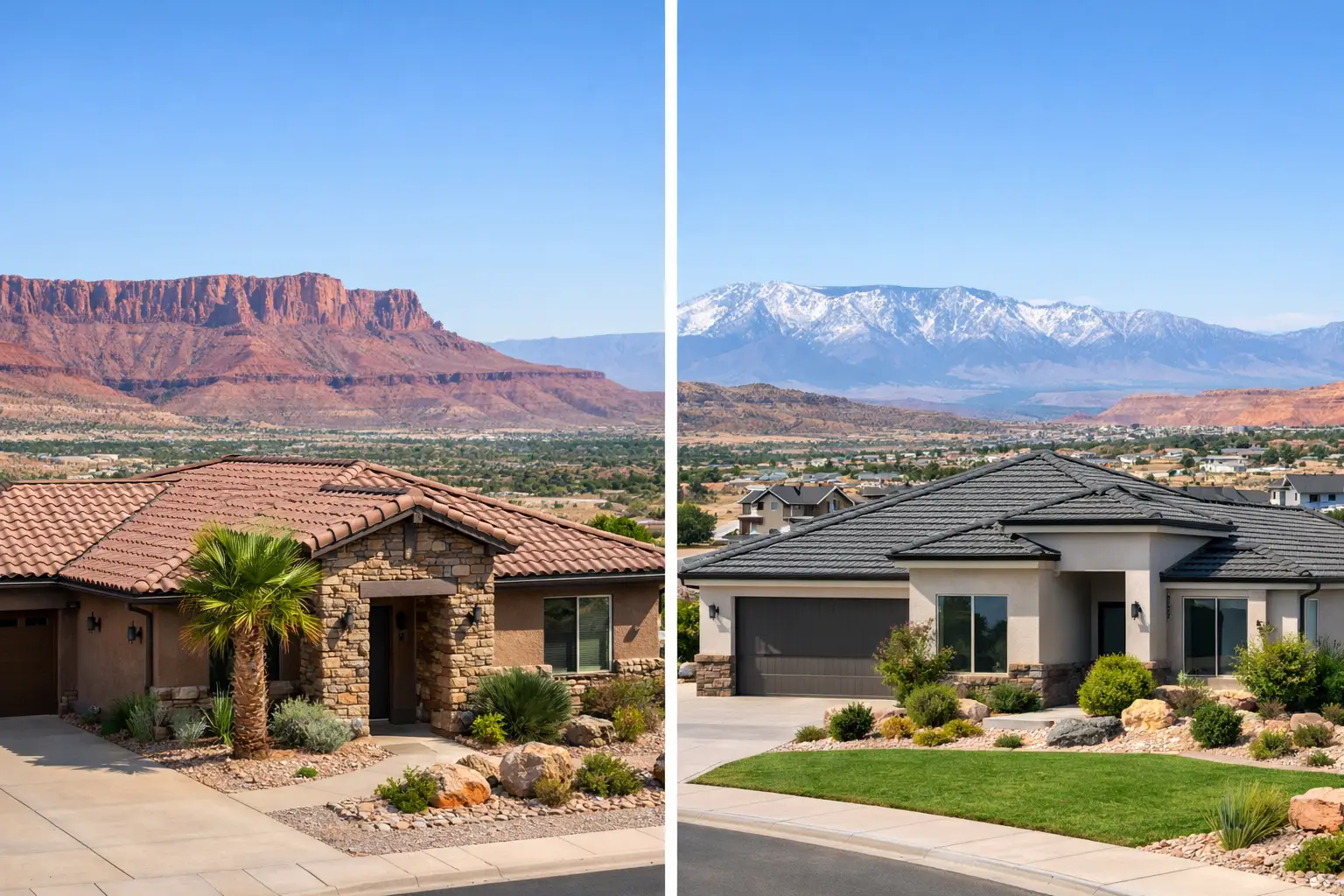
Hurricane has a more relaxed, small-town feel, with a strong connection to outdoor recreation. It is a natural fit for buyers who want to be close to Sand Hollow Reservoir, Zion National Park access routes, mountain biking, off-road trails, golf, and wide-open views. Many residents appreciate that Hurricane feels a little removed from the pace of larger nearby commercial areas while still keeping everyday conveniences within reach.
Washington tends to feel more connected to the greater St. George area. Buyers often choose it for its proximity to shopping, dining, medical services, schools, and major routes through Southern Utah. Depending on the neighborhood, Washington can offer a polished suburban setting, newer master-planned communities, and a shorter drive to many of the region’s employment and entertainment hubs.
Neither lifestyle is better across the board. A buyer who values quiet evenings, recreation access, and a little more breathing room may feel immediately at home in Hurricane. Someone who wants efficient access to services and an established suburban setting may prefer Washington. The best way to make the distinction clear is to drive the neighborhoods at the times you would actually use them – weekday mornings, late afternoons, and weekends.
Housing Styles and Neighborhood Character
Hurricane offers a broad range of homes, from established properties on larger lots to newer construction in growing subdivisions. Buyers may find options with RV parking, garages designed for recreational equipment, detached workshops, or room for a pool. These features can be especially appealing for households that came to Southern Utah to enjoy boats, side-by-sides, golf carts, or an active outdoor lifestyle.
The community also includes areas with distinctive views of red rock landscapes, mesas, and the surrounding desert. That visual connection to the landscape is a major part of Hurricane’s appeal, although it can come with practical questions about lot orientation, sun exposure, landscaping needs, and future development nearby.
Washington also provides a varied inventory, but its neighborhoods may feel more built out or more closely connected to neighboring St. George communities. Buyers will see established family neighborhoods, newer subdivisions, townhomes, patio homes, and properties designed for low-maintenance living. Some communities include HOA amenities or design standards that create a more consistent streetscape.
For a move-up buyer, Washington may offer convenient access and newer home features without leaving the urban core too far behind. For a buyer seeking a primary residence with more recreational flexibility, Hurricane may present a wider range of properties that support that vision. However, the individual neighborhood matters more than the city name alone. Lot size, construction age, HOA rules, views, and nearby traffic patterns can change the experience dramatically.
New Construction Is Not the Same Experience Everywhere
New construction is available in and around both communities, but builders, lot releases, incentives, and timelines can vary considerably. A new home may offer modern energy features, current floor plans, and fewer immediate repair needs. It can also involve decisions about upgrades, landscaping, window coverings, and the final cost of completing the property after closing.
Buyers should look beyond the base price. Ask what is included, how long the build will take, whether the lot carries a premium, and what construction is planned around the home. In a growing area, a peaceful vacant lot today may become a future street, park, or neighboring phase. Careful builder coordination and contract review can make a meaningful difference in the overall experience.
Price, Value, and the Details Behind the Number
It is tempting to assume Hurricane will always be less expensive than Washington, or that one city automatically offers better value. Real estate does not work that neatly. A home’s price is shaped by location, view, lot size, age, condition, HOA structure, upgrades, and current inventory. A well-positioned Hurricane home near recreation or with exceptional views can command a premium, just as a Washington home with a central location and modern finishes can.
Rather than comparing average prices alone, compare similar homes based on your real priorities. If you need a three-car garage, single-level living, a private yard, and space for an RV, your best options may look very different than those of a buyer seeking a lock-and-leave townhome near services.
Sellers should take the same approach. Pricing a Hurricane property requires more than selecting a number from a nearby sale. A home with parking, a view, or access to outdoor recreation may need a different marketing strategy than a more conventional neighborhood property. In Washington, location convenience, community amenities, condition, and buyer demand for low-maintenance living can influence positioning. Thoughtful preparation and accurate pricing help a home stand out without leaving money on the table.
Commute, Convenience, and Everyday Logistics
Washington generally has an edge for buyers who want to be close to St. George’s retail, healthcare, dining, and employment centers. For some households, saving time on daily errands or work commutes is worth prioritizing. It can also be an advantage for retirees or relocating buyers who want familiar conveniences close by.
Hurricane is still highly practical for everyday living, but the drive to certain services may be longer depending on the exact neighborhood. Many buyers see that as a worthwhile trade for its outdoor access and more relaxed pace. The key is to be honest about your routine. Consider school drop-offs, medical appointments, airport trips, grocery runs, and how often you expect to visit St. George.
This is also where a test drive helps. Map estimates are useful, but they do not reveal how a route feels during busy traffic, summer heat, or after a long workday.
Investment and Second-Home Considerations
Both markets can attract investors and second-home buyers, but a strong investment decision starts with the intended use. Long-term rental demand, short-term rental rules, HOA restrictions, local ordinances, carrying costs, and management needs should all be reviewed before making an offer. A property that looks perfect for vacation rentals may have rental restrictions that change the numbers entirely.
Hurricane can be compelling for buyers drawn to Sand Hollow and the region’s recreation economy. Washington may appeal to renters who value proximity to St. George’s services and employment areas. Still, no community should be treated as a guaranteed return. Purchase price, financing, insurance, maintenance, vacancy assumptions, and the property’s specific rental eligibility all deserve a careful analysis.
For second-home buyers, maintenance deserves equal attention. Desert landscaping, pool care, roof condition, HVAC performance, and lock-and-leave suitability can matter more than a dramatic view if you will be away for part of the year.
Questions to Ask Before You Choose
Before deciding between these two communities, focus on the factors that will shape your ownership experience. How much space do you need? Do you want HOA amenities or fewer restrictions? Is proximity to St. George essential, or would you rather be closer to trails and reservoir recreation? Are you comfortable with a newer, developing area, or do you prefer an established neighborhood?
Also investigate property-specific items early. Review HOA documents, flood-zone information, utility costs, insurance availability, zoning, and any rental restrictions. In Southern Utah, a home can be only minutes from another property but have very different rules, risks, and ownership costs.
A local Realtor can help you compare those details without rushing you toward a one-size-fits-all answer. Amy Hansen helps clients weigh the lifestyle and financial sides of the decision, from neighborhood tours and property history to negotiations and the practical questions that surface before closing.
The home that fits best is the one that supports the life you want to build. Whether that means a Hurricane home with room for weekend adventure or a Washington home close to the conveniences you value most, choosing with clarity will make the move feel like the beginning of something exciting.