Townhome Versus Single Family Ownership Choices
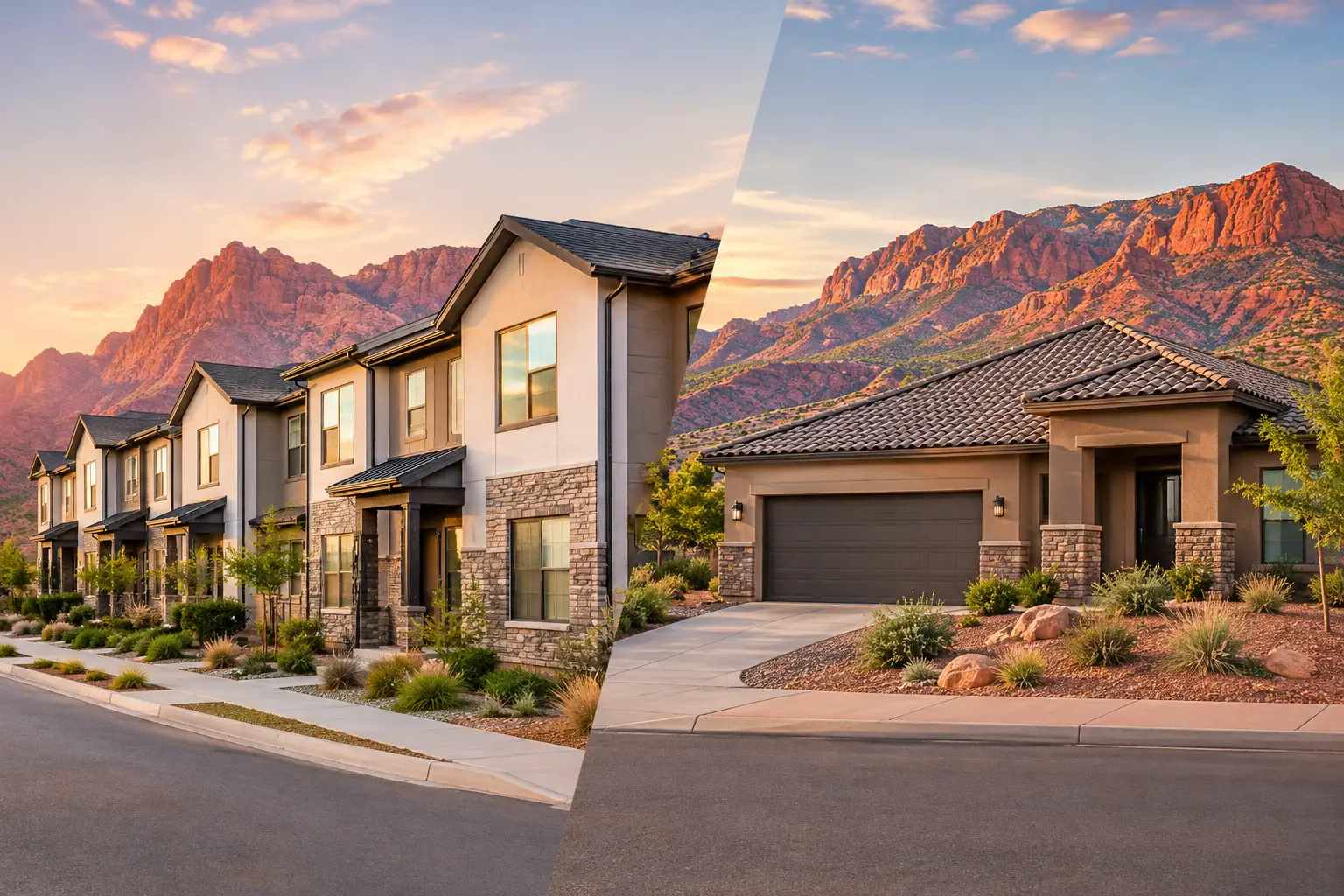
The choice often becomes real when buyers find two homes they love at a similar price: a newer townhome close to everyday conveniences or a single-family home with a yard, driveway, and more room to spread out. Townhome versus single family ownership is not simply a question of square footage. It is a decision about how you want to spend your time, where you want your money to go, and what kind of flexibility matters most in the years ahead.
For buyers in Southern Utah, the answer can look different from neighborhood to neighborhood. A lock-and-leave townhome may be an excellent fit for someone who travels, is relocating, or wants less exterior responsibility. A single-family home may feel worth the added work for a family that wants outdoor living, room for pets, or the freedom to personalize the property. The right choice starts with an honest look at your lifestyle and total monthly cost.
Townhome versus single family ownership: the real differences
A townhome is typically attached to one or more neighboring homes, often with a shared wall and a homeowners association. Ownership usually includes the interior of the home and, depending on the community, a small patio, courtyard, or limited outdoor area. The HOA commonly manages shared spaces and may handle exterior maintenance such as landscaping, roofs, exterior paint, irrigation, and private streets.
A single-family home is usually detached and sits on its own lot. You have more direct control over the home, yard, exterior improvements, and maintenance decisions. That freedom is valuable, but it also means the responsibility for a leaking roof, aging HVAC system, landscaping issue, or fence repair generally rests with you.
Neither option is automatically better. A townhome can offer an easier ownership experience, while a single-family home can provide more privacy and control. The better fit depends on what you value enough to pay for, maintain, or give up.
Start with your day-to-day lifestyle
A townhome often appeals to buyers who want homeownership without making weekends revolve around exterior upkeep. If you prefer hiking, golf, travel, or time with family over mowing, trimming, and arranging repairs, an HOA-maintained community can feel like a welcome trade-off. It can also be a practical option for part-time residents who want more confidence that the property will be cared for while they are away.
Single-family ownership can be especially appealing when outdoor space is part of the reason you are moving. A larger yard can create room for kids to play, dogs to roam, gardens to grow, and friends to gather. In communities around Hurricane, Washington, and St. George, outdoor living is a meaningful part of the lifestyle for many buyers. A covered patio, pool, views, or space for recreational gear may matter more than a low-maintenance setup.
Privacy is another important distinction. Even well-designed townhomes have closer neighbors and shared walls. Some buyers appreciate the sense of community; others want more separation, quieter outdoor areas, and fewer restrictions around how they use their property. A detached home usually provides more of that breathing room.
Look beyond the purchase price
One of the most common mistakes buyers make is comparing only the list price and mortgage payment. The more useful comparison is the full monthly and long-term cost of ownership.
Townhomes often have HOA dues. Those dues may cover valuable services, but buyers should understand exactly what is included and what is not. A lower-maintenance property does not mean no maintenance. Owners may still be responsible for windows, plumbing, HVAC, appliances, interior finishes, and certain exterior components. HOA dues can also change over time, and special assessments are possible if the community needs major work that reserves cannot cover.
Single-family homes may not have HOA dues, or the dues may be lower, but the maintenance costs are more direct. Budgeting for roof repairs, tree care, exterior painting, pest control, irrigation, and yard equipment is part of responsible ownership. A home with a larger lot can bring more freedom and more expense.
Insurance deserves careful attention as well. Townhome insurance may be less expensive than insurance for a detached home because the HOA master policy covers certain building components. However, coverage varies widely by community. Buyers should review the association’s insurance responsibilities and confirm with an insurance professional what their individual policy needs to protect.
Ask for the HOA documents early
When considering a townhome, the HOA is part of the purchase decision. Review the current budget, reserve funding, rules and regulations, recent meeting notes, pending assessments, rental restrictions, pet policies, and what the monthly dues cover. These documents can reveal whether the association is financially prepared and whether the community fits the way you want to live.
For example, a community may limit exterior changes, parking arrangements, or short-term rentals. Those rules can protect neighborhood consistency, but they may also limit plans you have for an investment property, a work vehicle, additional guests, or a future remodel. Good guidance means understanding those details before you are under contract, not after closing.
Maintenance is a trade-off, not a minor detail
Townhome buyers often appreciate the predictability of shared maintenance. In Southern Utah, landscaping and irrigation can require ongoing attention, particularly during hot, dry months. When those items are professionally managed through an HOA, ownership can feel simpler.
Still, shared maintenance means shared decision-making. You may not choose the landscape design, exterior color, roofing timeline, or contractor. If you prefer to make every decision about your property, a detached home may feel more comfortable.
With a single-family home, you control the schedule and standard of maintenance. Want drought-tolerant landscaping, a larger patio, a workshop, or a backyard designed for entertaining? You generally have more room to make those changes, subject to local rules and any applicable HOA guidelines. The responsibility is greater, but so is the ability to shape the home around your life.
Think about resale from the next buyer’s perspective
Both townhomes and single-family homes can be strong resale options when they are well located, well maintained, and priced strategically. Demand changes by market segment, though. Townhomes may attract first-time buyers, downsizers, professionals, investors where rentals are permitted, and second-home buyers seeking a simpler property. Their affordability relative to detached homes can broaden the buyer pool.
Single-family homes often draw buyers who prioritize yards, privacy, storage, parking, and flexibility. Those features can be especially valuable for growing households and buyers who plan to stay longer. A well-kept detached home in a desirable neighborhood may have broad appeal, but it can also command a higher price point that narrows the pool of qualified buyers.
Location and condition usually matter more than the label alone. A thoughtfully located townhome with strong HOA management may sell more easily than a poorly maintained single-family home in a less convenient area. Conversely, a detached home with usable outdoor space can be difficult to replace when inventory is limited.
Investment goals can change the answer
For an investor, the townhome versus single family ownership decision should begin with the numbers and the rules. Townhomes may offer a lower entry price and fewer exterior maintenance demands, which can make budgeting more predictable. Yet HOA dues, rental caps, lease requirements, and restrictions on short-term rentals can materially affect cash flow and exit options.
Single-family rentals may offer more flexibility, more tenant appeal, and potential for value-add improvements. They can also require greater reserves for maintenance, landscaping, vacancies, and capital repairs. A larger home is not automatically a better investment if the rental demand, operating costs, or financing terms do not support it.
A clear investment plan matters more than a property type. Before making an offer, evaluate projected income, recurring expenses, HOA policies, local rental regulations, condition, and the likely buyer pool when it is time to sell.
Questions that bring the decision into focus
If you are torn between a townhome and a single-family home, consider what you want your typical Saturday to look like. Do you want to maintain a yard or enjoy it without being responsible for every detail? Do you need storage, parking, and room for a growing household? Are HOA rules reassuring, or do they feel restrictive? And can you comfortably afford the full cost of the home, including dues, insurance, maintenance, and reserves for repairs?
It also helps to think five years ahead. A townhome that feels ideal now may remain ideal if your priority is flexibility and simplicity. A single-family home may better support changing needs if you expect pets, children, frequent guests, hobbies, or a stronger desire for outdoor space.
The best home is not the one with the fewest responsibilities or the biggest yard. It is the one that supports the life you want to build, while leaving room in your budget and your schedule to enjoy it. A thoughtful comparison of the property, neighborhood, HOA, and your long-term plans can turn an uncertain choice into a confident next step.